.png)
Concept
In Acumin the GL operations are matter driven, therefore all related accounting objects have their GL operations following the firm of the matter. As a result, revenue and receivables are based on the firm of the matter, yet from a management perspective, these numbers can be reported based on the firm of the matter or the default firm of the working member or role-holder.
Where inter-firm logic is applied, the matter will have system generated inter-firm operations resulting from completed transactions and regular operability. The existence of these transactions limits the transfer of a matter from one firm to another, to ensure the integrity of inter-firm operations is not compromised. As a result, the firm of a matter can only be modified on matters without these accounting objects already in place.
A change of firm once the matter that has these accounting objects in place implies the correction of accounting errors, therefore it is recommended that the process for changing firms be considered in accordance with accounting policy and kept to the correction of .
Security
To be able to change the firm of a matter firm, the matter must not have any activity. If there is activity, please consider the process that follows.
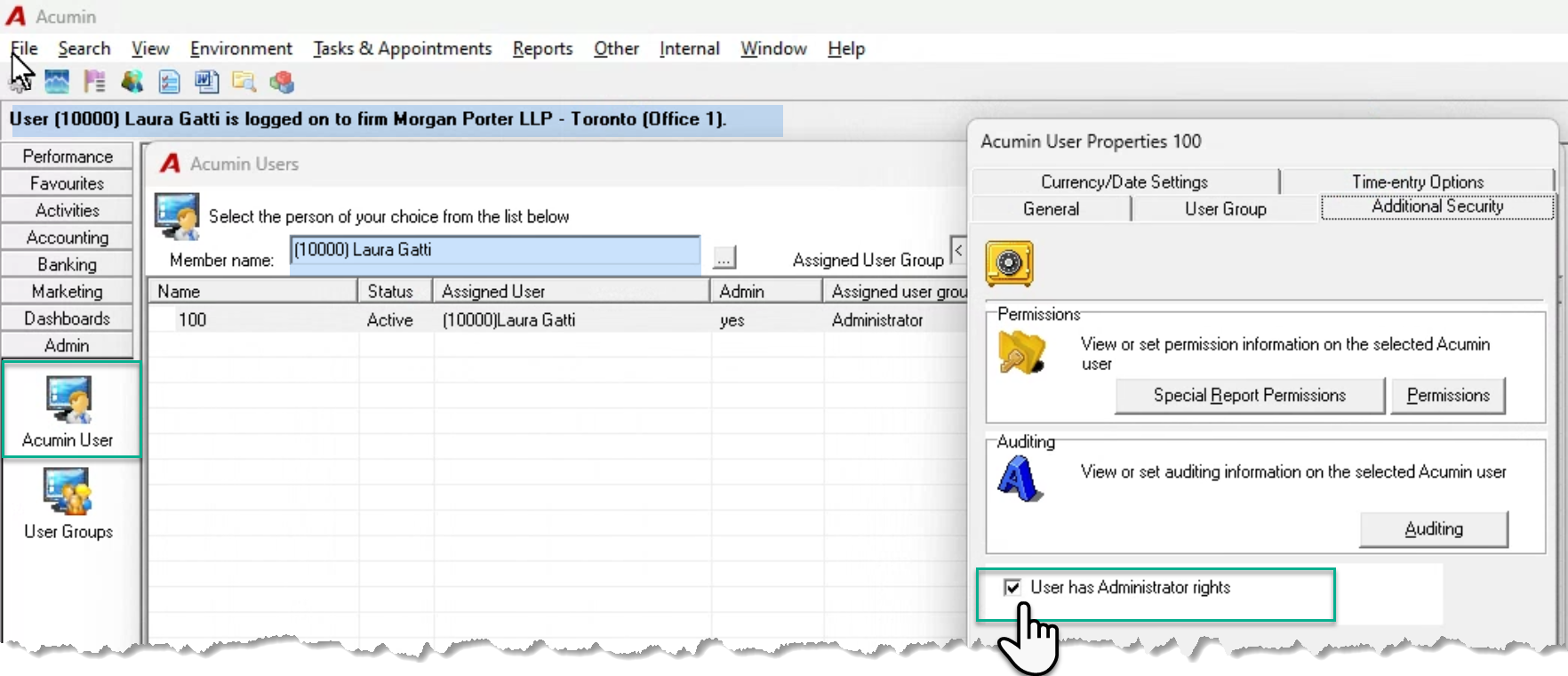
In addition, to the no activity requirement, the functionality is only available for the user that is set as the member responsible for the matter affected OR for users with administrative rights.
Process
Authorized users that want to change the Firm of a matter after there is activity will receive the message, “Cannot change firm; There is activity pending to this item!”
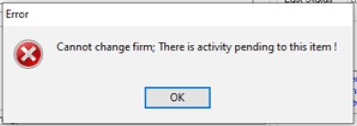
This is an expected outcome as once there are transactions it is not possible to change the office (firm) of the matter without considering the impact of transaction to safeguard the integrity of the completed inter-firm GL operations.
If there is pending activity, determine the business reason for modifying the firm of a matter. Was it an error in applying the firm's revenue recognition policy? Is it a matter that has changed in nature?
Matter Opened in the Wrong Firm
If a matter was opened under the wrong firm, then it is likely noticed early in the process. In this case there are two possible scenarios to consider:
If the matter has not been billed, it only includes unbilled entries, open a new matter in the intended firm, transfer the unbilled entries and close the first matter due to being opened in the wrong firm (office).
If the matter has been billed, cancel the invoices – a process that may require cancelling receipts using the date of the object as the cancellation date until all entries are unbilled and can be transferred to the new matter where the invoice can be created using the same dates and the receipts if any reapplied. .
In both cases, to retain the original matter number, of the matter in the wrong firm, change the number of the matter in wrong firm by adding a consistent increment. For example, for matter 4100 add 9990000 to get 9994100, and when you open the new matter change the matter number assigned to 4100.
Change in Nature of the Matter
If a matter has a change in nature and the revenue stream from ensuing work should be recognized in another firm, create a new matter for the work as at the business related cut-off point.
Multiple Profit Center Logic - Points to Consider
If a change of role-holder is made to any role, this change will allow users to report based on the firm of the role-holder and the matter will be grouped under that member independent of its firm;
Some reports also report by firm of the member therefore users selecting to report by the firm of the member will see the information grouped by the firm of the member and not the firm of the matter;
If a matter is re-opened it should remain in the same firm even if the member role is changed to remain consistent with revenue recognition policies.
Any timekeeper can transact in the matter regardless of location - even if its location is not the same as that of the member.
If the changing of the firm to equal that of the member assigned to a specific role is part of a firm process, the latter should be reconsidered as this process reduces the reporting dimensions for the firm and the potential for optimizing more advanced reporting opportunities with respect to matter profitability models.