.png)
QUESTION: After we cancel an invoice, we try to delete the invoice but we are getting the following error message:
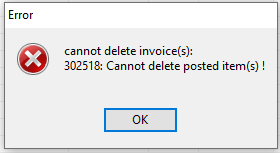
RESPONSE: The cancellation function is only applicable to posted invoices. It generates GL operations as at the cancellation date and changes the status of the invoice from posted to cancelled. The cancelled invoice record and its association to the entries originally billed remain as an audit trail as well as to be able to report relevant measures historically, therefore it cannot be deleted. This does not prevent users from re-billing the entries within the new invoice.
The selection of the cancellation date must be made in context of what you need to do next. If the cancellation is because the invoice was not sent out and a new invoice will be created at a future date, then it can be cancelled with the current date. The impact of this decision is that if the time that was billed for a period is corrected (i.e., the time spent was 1.50 hour instead of 0.50), if you back date the WIP report the time entry would be reflected at 1.50 hours and not 0.50 after the change. This is not a problem, just an impact of a potential timing difference. If the cancellation was to replace the invoice as at the same date, then the cancellation should be back dated to the original date of the invoice. The impact of this decision is that if the month is closed your revenue and related measures may be different by the differential in fee between the original invoice and the new one, as well as unbilled disbursement positions if applicable.
The delete function is only applicable to invoices not yet posted and will not generate GL operations therefore the impact on reported measures is limited. However, if the original invoice had anticipated disbursements and it is left unposted across a month end and then deleted, there is a reporting and GL impact on unbilled disbursements retroactive to the date of the anticipated (pre-billed) disbursements because the credit triggered at the time the anticipated disbursement was created, is reversed as at its transaction date. To mitigate this impact, it is recommended that unposted invoices which are not deleted as part of month end are moved forward to a future period by changing the invoice transaction date as well as by deleting any anticipated disbursements that may be included.